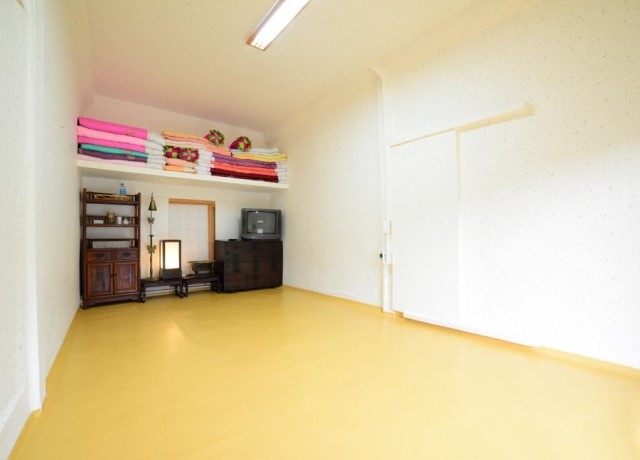
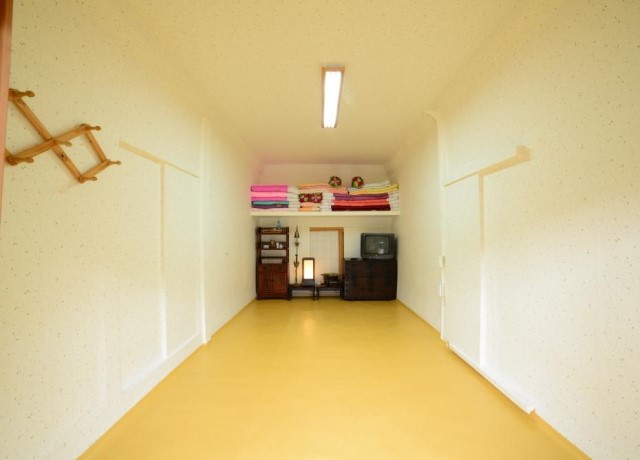
[ An-dong ] An dong Kim Tae Jang Jae Sa ( Lee Sang Roo ) - Small Room
Taejangjaesa of the Andong Kim Clan is a historic house located in Taejang-ri, Seohu-myeon, Andong-si, Gyeongsangbuk-do. It was designated as Gyeongsangbuk-do Folklore Material No. 26 on April 25, 1981. Managed by the Andong Kim Clan, it is a place where clan meetings were held and the altar of Kim Seon-pyeong, a meritorious subject during the reign of King Taejo of Goryeo and the founder of the Andong Kim Clan, was guarded. There are three buildings, and an ancestral memorial service is held here every year on October 10th of the lunar calendar.
Built in 1750 and having undergone several renovations to reach its present state, Taejangjaesa is adjacent to the road, but it does not feel like it at all. Instead, it is surrounded by many old trees, making it feel like it is in the middle of a dense forest. In addition, boxwood and arborvitae trees are planted in rows and well-trimmed along both sides of the trail leading to Taejangjaesa, reflecting the hard work of the Andong Kim Clan in managing the site.
The beautiful curves of the tiled roof of Isangnu Pavilion at Taejangjaesa, which look like wings stretching toward the sky, captivate the eyes. The elegant appearance radiating from the large two-story wooden pavilion, which spans seven kan, leaves visitors in awe. Isangnu Pavilion was built for ancestral rites and is quite large, so there is no problem holding events with many people at once.
The side has two kan and features a hip-and-gable roof. If you look closely at the roof, you will fall in love with the gentle charm of the hanok, which seems to look back at you with a smile. The door to the adjacent Gojiksa (caretaker's quarters) is open. The building is arranged in a square ('ㅁ') shape, naturally forming a courtyard in the center. Standing in the middle of it, you can feel a cozy and comfortable atmosphere.
The historic house sits on a well-trimmed square stone wall, and looking up at it, you are overwhelmed by its majestic appearance. Looking at Isangnu Pavilion from the inside, the warm sunlight pierces through the hanji (traditional Korean paper) doors, giving a gentle feeling, and the wooden carvings on the railing are as delicate and beautiful as a work of art. It is mysterious that the inside and outside give such different impressions, and you can once again feel the charm of hanok in the way the historic house becomes one with the surrounding natural landscape.
◦Accommodates (standard/max): 2 / 4
※ For every additional guest over the standard number : KRW 10,000
◦Room rate: KRW 50,000
[Near attraction]
Hahoe Folk Village
The Hahoe Folk Village is a traditional village from the Joseon Dynasty. The village
is a valuable part of Korean culture because it preserves Joseon period-style architecture, folk traditions, valuable books, and old tradition of clan-based villages.
The village maintains old architectural styles that have been lost because of rapid modernization and development in South Korea. Aristocratic tile-roofed residences and thatched-roof servants' homes preserve the architectural styles of the Joseon Dynasty. Wonjijeongsa Pavilion and Byeongsan Confucian School are two notable structures in the village. The village has preserved the shamanist rite of Byeolsin-gut and preserved Hahoe masks used in the Hahoe Mask Dance. Another rite still practiced is the Jeulbul Nori which uses strings of fireworks fired at the base of the Buyongdae Cliff. The village was listed by the South Korea government as a UNESCO World Heritage site in 2010, along with Yangdong Folk Village.



 KakaoTalk
 Facebook
  Twitter
  Email
Email